 Making its way around social media is an American Legion post with a photo of a whiteboard where someone wrote:
Armed Forces Day (3rd Saturday of May) – for those who currently wear the uniform
Veterans Day (November 11th) – for those who used to wear the uniform
Memorial Day (last Monday of May) – for those who never made it out of uniform
My dad, Robert Guy Burnor, was a veteran of both the Korean and Vietnam wars. He retired in 1976 as a master sergeant in the U.S. Air Force after 26 years of combined military service. He died in 2001 and is buried in the Fort Snelling National Cemetery.
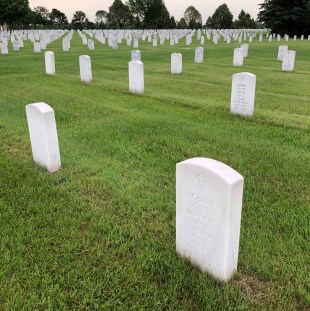
Fort Snelling has more than 225,000 interments. Last year, volunteers placed American flags at every headstone for the first time in 35 years. I believe it will be done again this year.
Even though Memorial Day explicitly honors those who died during active military service, acts like these and other symbols of remembrance effectively include veterans who died after having served earlier in their lives.
During my dad’s service, he received the Bronze Star Medal, the Combat Readiness Medal, and the Air Force Commendation Medal, among other military commendations. My mom served for three years as well and met my dad when they were both stationed at the Selfridge Air Force Base in Mount Clemens, Mich.
Their time in the military largely happened before I came around, and I grew up hearing tales of an adventurous and interesting life together. But they largely kept hidden their deeper stories of war, alcoholism, separation. I wonder if their faith ever wavered. I wonder about the depths of moral injury they and their friends may have suffered. Continue reading →
 I’m in Montgomery Alabama as I write this, here as part of a colleague’s ordination ceremony. In some stroke of fate, I’m here the day after the Alabama Legislature—25 white men—voted to outlaw abortion, even in the case of incest and rape. They also voted that doctors who perform this medical procedure face life in jail. And, just as I arrived, the Governor signed it into law.
 Atheist theologian Anthony Pinn describes the purpose of religious community as being a community that seeks “more” in its quest for what he calls “complex subjectivity.” In saying this, he’s referencing philosopher William James, and while I don’t want to get into the weeds and unpack the specifics of what Pinn (and James) are talking about (and why they use some big words to do it!), I do find this notion to be evocative of what we aim to do here in UU religious community, and provocative for what we’re exploring with this month’s theme of curiosity.
 The other day, I sat in a circle with about 40 men who are incarcerated at the Minnesota state correctional facility in Stillwater. They had come for a session in mindfulness meditation, which is offered twice a month by a group of volunteers. I’ve been to Stillwater before, but I’m just starting to volunteer with this particular group.
 You’ll receive this on Good Friday, and as the day turns to night, Passover seders will begin all over the world. Though UUs mark Easter in our own ways, we do little to note the crucifixion which must happen before the ressurection can occur. And while about ten percent of us are “Jewnitarian,” the UU seders I’ve attended over the years have been brief and abbreviated, nothing like the long forays into deep discussion and reflection I’ve celebrated in the houses of Jewish friends.
 UUCM Happenings